Blockchain technology is transforming industries by enabling secure transactions, decentralized applications, automated business operations, and transparent data management. However, developing a successful blockchain solution requires professionals with specialized technical knowledge, practical experience, and strong problem-solving abilities.
When hiring blockchain developers, businesses should evaluate expertise in smart contract development, blockchain architecture, programming languages, cryptography, security, and decentralized application development. Selecting the right development partner helps organizations reduce implementation risks, optimize development expenses, and build reliable blockchain solutions aligned with long-term business objectives.
Quick Answer
When hiring blockchain developers through Fixnhour, look for expertise in blockchain architecture, smart contracts, cryptography, programming languages, decentralized applications, and cybersecurity. Developers should also possess practical experience with blockchain platforms, API integration, scalability solutions, problem-solving, and communication to build secure, efficient, and scalable applications that meet specific business requirements.
Key Takeaways
- Blockchain architecture and distributed ledger knowledge are fundamental developer skills.
- Solidity, Rust, Python, and JavaScript are valuable blockchain programming languages.
- Smart contract development and security expertise help reduce technical vulnerabilities.
- Blockchain platform experience should align with specific project requirements.
- Practical assessments and development portfolios help verify technical capabilities.
- Hiring costs vary depending on expertise, location, and project complexity.
- Communication and problem-solving skills contribute to successful project execution.
- Fixnhour helps businesses discover and compare blockchain development companies.
Understanding Blockchain Development and Its Growing Demand
Blockchain development involves designing, developing, testing, and maintaining decentralized applications, distributed networks, smart contracts, and digital asset management systems. Businesses across finance, healthcare, gaming, logistics, and supply chain management are increasingly investing in Blockchain Development Services to improve operational efficiency, security, transparency, and data integrity. The growing adoption of decentralized technologies creates opportunities for skilled professionals capable of developing secure, scalable, and reliable blockchain applications worldwide.
What Does a Blockchain Developer Do?
A blockchain developer designs decentralized systems, develops smart contracts, integrates blockchain networks, and maintains application security. These professionals collaborate with software engineers, designers, and business stakeholders to develop functional blockchain solutions that satisfy technical requirements, operational objectives, and industry standards.
What Are the Different Types of Blockchain Developers?
Blockchain developers specialize in different areas depending on their technical expertise and project responsibilities. Businesses should identify the appropriate developer category based on their application requirements, infrastructure needs, security expectations, development budget, and overall blockchain implementation strategy.
- Core blockchain developers
- Blockchain application developers
- Smart contract developers
- Web3 developers
- Blockchain security specialists
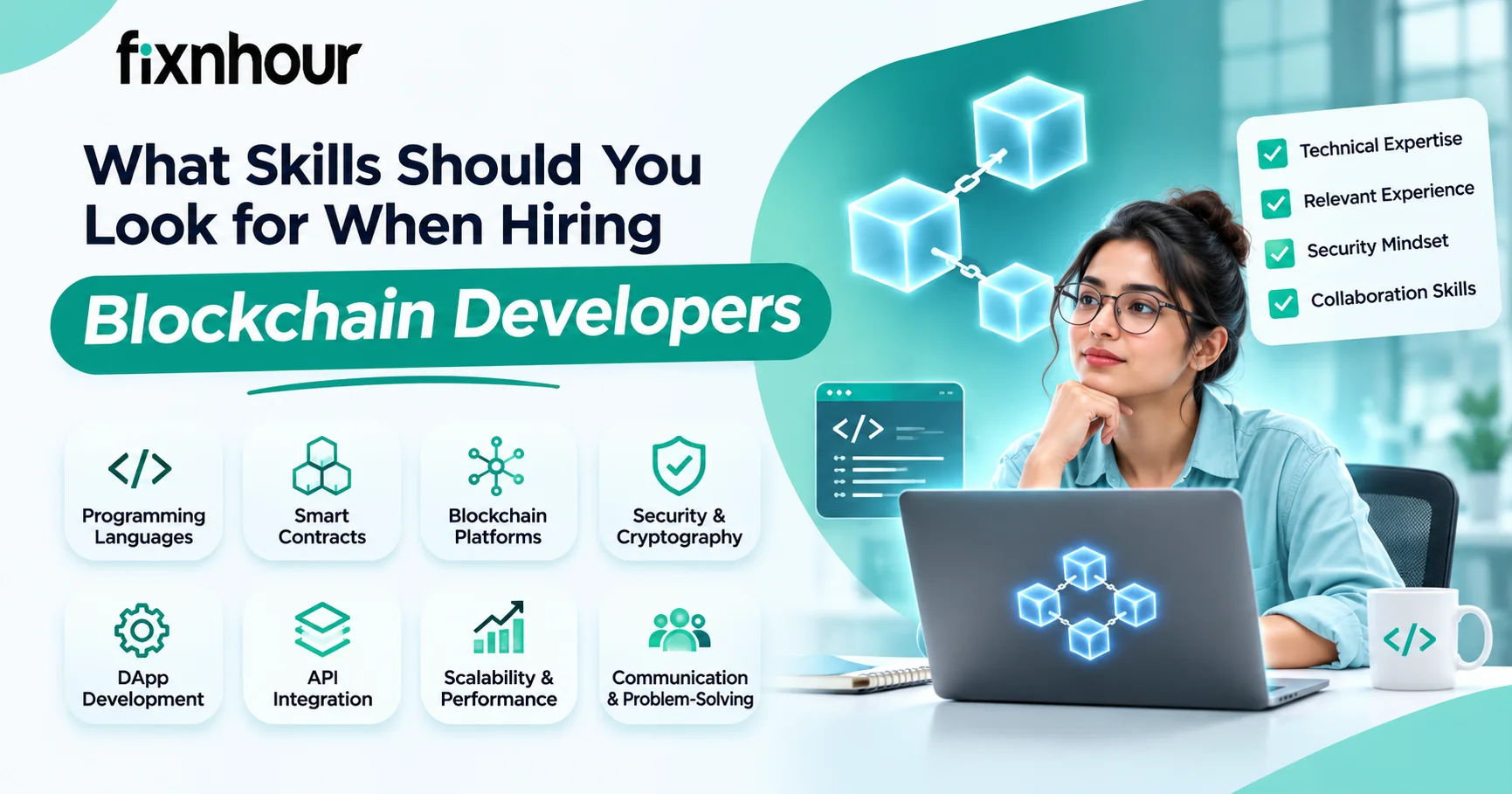
What Technical Skills Should You Look for When Hiring Blockchain Developers?
Hiring blockchain developers requires evaluating technical capabilities across multiple areas, including programming, distributed systems, smart contracts, cybersecurity, and application development. Similar to AI development company evaluation, businesses should assess developers' technical expertise, industry experience, project portfolios, and problem-solving abilities. Selecting professionals with relevant blockchain expertise helps businesses develop reliable applications, optimize transaction performance, address security vulnerabilities, and support long-term scalability.
1. Blockchain Architecture and Distributed Ledger Technology
Blockchain developers should understand distributed ledger technology, consensus mechanisms, decentralized networks, transaction validation, and blockchain protocols. Strong architectural knowledge enables developers to design efficient blockchain systems while selecting suitable network structures based on business requirements, scalability, and security expectations.
2. Blockchain Programming Languages
Proficiency in relevant programming languages enables developers to build smart contracts, decentralized applications, blockchain protocols, and supporting infrastructure. Businesses should evaluate programming expertise according to their selected blockchain platform, project complexity, application functionality, integration requirements, and long-term development objectives.
3. Smart Contract Development and Auditing
Smart contract development expertise is essential for creating automated blockchain operations. Developers should understand contract deployment, gas optimization, testing methodologies, vulnerability detection, and secure coding practices to reduce operational risks and ensure reliable execution of blockchain-based transactions and agreements.
4. Cryptography and Blockchain Security
Blockchain developers must understand cryptographic hashing, digital signatures, public and private keys, encryption techniques, and secure authentication. These capabilities help protect sensitive information, maintain transaction integrity, prevent unauthorized access, and address potential security vulnerabilities within decentralized applications and networks.
5. Decentralized Application Development
Experienced blockchain developers should understand frontend development, backend architecture, smart contract integration, digital wallets, and decentralized storage. These skills enable developers to create functional and user-friendly decentralized applications that support secure transactions and seamless interaction with blockchain networks.
6. Blockchain Platform Expertise
Developers should possess practical experience with blockchain platforms such as Ethereum, Solana, Polygon, Hyperledger Fabric, or BNB Chain. Platform-specific expertise helps businesses select appropriate technologies, optimize transaction costs, address infrastructure limitations, and build applications aligned with operational requirements.
7. API Integration and Web3 Development Tools
Blockchain developers should understand APIs, software development kits, wallet integration, blockchain nodes, and Web3 development frameworks. Familiarity with tools such as Hardhat, Foundry, ethers.js, and OpenZeppelin supports efficient development, automated testing, secure deployment, and reliable communication between application components.
8. Blockchain Scalability and Interoperability
Scalability and interoperability skills help developers address network congestion, transaction delays, infrastructure limitations, and cross-chain communication requirements. Knowledge of Layer-2 solutions, rollups, sidechains, and cross-chain protocols enables developers to design applications that accommodate increasing transaction volumes and operational demands.
What Soft Skills Should Blockchain Developers Have?
Technical expertise alone does not guarantee successful blockchain project delivery. When hiring developers from Blockchain App Development Companies in India, businesses should also evaluate communication, adaptability, analytical thinking, collaboration, and effective project management capabilities. These skills help development teams understand business objectives, communicate technical challenges, resolve implementation issues, maintain productivity, and deliver blockchain solutions that meet organizational expectations while supporting efficient collaboration throughout the software development lifecycle.
1. Analytical Thinking and Problem-Solving Skills
Blockchain developers should possess strong analytical and problem-solving abilities to identify technical challenges, investigate software defects, evaluate alternative solutions, and resolve complex implementation issues. These skills help developers optimize application performance, minimize development risks, and deliver efficient, reliable blockchain solutions.
2. Communication and Team Collaboration
Effective communication and collaboration skills enable blockchain developers to explain complex technical concepts, understand stakeholder expectations, share development updates, and coordinate with multidisciplinary teams. These abilities help maintain transparency, reduce misunderstandings, improve team productivity, and ensure successful blockchain project execution.
3. Adaptability and Continuous Learning
Blockchain developers should continuously update their knowledge of emerging technologies, programming frameworks, security standards, and evolving industry practices. Adaptability enables professionals to respond effectively to technological changes, overcome development challenges, implement innovative solutions, and maintain competitiveness within the blockchain ecosystem.
4. Project Management and Business Understanding
Blockchain developers should understand business requirements, manage development priorities, allocate resources effectively, and meet project deadlines. Strong project management and business understanding help developers align technical decisions with organizational objectives, optimize development expenses, and deliver solutions that support sustainable growth.
Benefits of Hiring Skilled Blockchain Developers
Hiring skilled blockchain developers provides businesses with specialized technical expertise, advanced development capabilities, and reliable implementation strategies. Following a comprehensive technology partner guide helps organizations select experienced professionals who can strengthen application security, optimize system performance, streamline smart contract development, and reduce technical risks. Their expertise also supports seamless blockchain integration, efficient resource utilization, scalable application architecture, and long-term maintenance, enabling businesses to achieve sustainable growth and maintain competitive advantages.
Key Benefits of Hiring Skilled Blockchain Developers
- Enhanced blockchain application security and data protection.
- Efficient smart contract development and deployment.
- Improved application scalability and system performance.
- Reduced development costs and implementation risks.
- Seamless integration with existing business systems.
- Faster project execution and optimized resource utilization.
- Reliable application maintenance and ongoing technical support.
How to Hire the Right Blockchain Developers: Step-by-Step Process
Hiring blockchain developers requires a structured approach involving project planning, candidate research, technical evaluation, portfolio verification, and contractual agreements. Businesses exploring Blockchain App Development Companies in USA should follow a systematic hiring process to identify qualified professionals, compare development capabilities, manage recruitment expenses, and reduce implementation risks. Each hiring stage should focus on selecting developers whose technical expertise, industry experience, and development capabilities align with project requirements, security expectations, and long-term business objectives.
|
Steps |
Short Description |
Key Activities |
|---|---|---|
|
Step 1: Define Your Blockchain Project Requirements |
Establish clear business objectives, application requirements, development budgets, and project timelines to identify suitable blockchain developers. |
• Define project scope and business objectives. • Identify essential application features. • Establish budget and project timelines. • Determine blockchain platform and infrastructure requirements. |
|
Step 2: Identify Essential Technical Skills |
Identify the technical competencies and blockchain development capabilities required for successful project implementation. |
• Identify required programming languages. • Define platform-specific technical skills. • Establish smart contract and security requirements. • Evaluate integration and scalability requirements. |
|
Step 3: Research and Shortlist Blockchain Developers |
Research qualified blockchain developers through trusted B2B platforms, professional networks, and developer communities. |
• Research developer profiles and company backgrounds. • Compare technical expertise and industry experience. • Evaluate qualifications and service offerings. • Shortlist qualified blockchain developers. |
|
Step 4: Review Portfolios and Previous Blockchain Projects |
Examine previous blockchain projects and professional portfolios to verify practical experience, development quality, and technical capabilities. |
• Review completed blockchain projects. • Examine GitHub repositories and code quality. • Evaluate previous smart contract implementations. • Verify client references and project outcomes. |
|
Step 5: Conduct Technical Interviews and Coding Assessments |
Conduct structured interviews and practical assessments to evaluate programming expertise, blockchain knowledge, and problem-solving abilities. |
• Conduct blockchain-focused technical interviews. • Assign practical coding and smart contract tasks. • Evaluate analytical and problem-solving capabilities. • Assess development methodologies and coding standards. |
|
Step 6: Evaluate Security Knowledge and Communication Skills |
Assess developers' cybersecurity expertise, communication abilities, and collaboration skills to minimize development risks. |
• Assess secure coding practices. • Evaluate communication and collaboration skills. • Review smart contract security testing knowledge. • Verify understanding of blockchain vulnerabilities. |
|
Step 7: Compare Pricing and Engagement Models |
Evaluate development rates, engagement models, and maintenance expenses to select a suitable and cost-effective hiring arrangement. |
• Compare developer rates and quotations. • Evaluate freelance, dedicated, and full-time hiring models. • Review maintenance and support expenses. • Select a cost-effective development arrangement. |
|
Step 8: Finalize the Hiring Agreement and Onboarding |
Establish contractual agreements, project milestones, confidentiality requirements, and communication procedures to ensure smooth project execution. |
• Finalize contractual agreements and payment terms. • Establish project milestones and deliverables. • Define intellectual property and confidentiality requirements. • Complete developer onboarding and communication setup. |
Step 1: Define Your Blockchain Project Requirements
Identify business objectives, target audiences, essential application features, preferred blockchain platforms, development budgets, and expected project timelines before beginning recruitment. Establishing clear project requirements helps businesses identify suitable developers, prioritize technical capabilities, reduce unnecessary expenses, and ensure successful project implementation.
Key Activities:
- Define project scope and business objectives.
- Identify essential application features and functionalities.
- Establish development budget and project timelines.
- Determine blockchain platform and infrastructure requirements.
Step 2: Identify Essential Technical Skills
Determine the programming languages, blockchain frameworks, smart contract capabilities, security knowledge, and integration skills required for successful project implementation. Identifying essential technical competencies helps businesses evaluate candidates effectively, establish recruitment criteria, and select developers with expertise aligned with project requirements.
Key Activities:
- Identify required blockchain programming languages.
- Define platform-specific technical skills.
- Establish smart contract and security requirements.
- Evaluate integration and scalability requirements.
Step 3: Research and Shortlist Blockchain Developers
Explore trusted B2B platforms, professional networks, developer communities, and company websites to identify suitable blockchain development professionals. Compare their technical expertise, industry experience, service offerings, and professional backgrounds before creating a shortlist of qualified candidates aligned with your business requirements.
Key Activities:
- Research developer profiles and company backgrounds.
- Compare technical expertise and industry experience.
- Evaluate professional qualifications and service offerings.
- Shortlist qualified blockchain development professionals.
Step 4: Review Portfolios and Previous Blockchain Projects
Evaluate previous blockchain applications, GitHub repositories, smart contract deployments, and available client feedback to verify practical experience. Reviewing completed projects helps businesses assess development quality, technical capabilities, industry knowledge, and developers' ability to deliver secure, scalable, and reliable blockchain solutions.
Key Activities:
- Review completed blockchain development projects.
- Examine GitHub repositories and code quality.
- Evaluate previous smart contract implementations.
- Verify client references and project outcomes.
Step 5: Conduct Technical Interviews and Coding Assessments
Organize technical interviews and practical coding assessments to evaluate blockchain knowledge, programming capabilities, problem-solving skills, and development methodologies. Conducting structured technical evaluations helps businesses verify candidates' expertise, identify potential skill gaps, and determine their ability to manage complex development requirements.
Key Activities:
- Conduct blockchain-focused technical interviews.
- Assign practical coding and smart contract tasks.
- Evaluate analytical and problem-solving capabilities.
- Assess development methodologies and coding standards.
Step 6: Evaluate Security Knowledge and Communication Skills
Assess developers' understanding of smart contract vulnerabilities, cybersecurity principles, security testing procedures, communication abilities, and teamwork. Evaluating technical security knowledge alongside interpersonal skills helps businesses minimize development risks, improve team collaboration, maintain effective communication, and support successful blockchain project execution.
Key Activities:
- Assess secure coding and development practices.
- Evaluate communication and collaboration skills.
- Review smart contract security testing knowledge.
- Verify understanding of blockchain security vulnerabilities.
Step 7: Compare Pricing and Engagement Models
Compare developer rates, project estimates, available engagement models, and ongoing maintenance expenses to identify suitable development arrangements. Evaluating pricing structures helps businesses optimize development investments, maintain financial transparency, select appropriate hiring models, and establish realistic budgets for long-term blockchain implementation.
Key Activities:
- Compare developer rates and development quotations.
- Evaluate freelance, dedicated, and full-time hiring models.
- Review ongoing maintenance and support expenses.
- Select a cost-effective development arrangement.
Step 8: Finalize the Hiring Agreement and Onboarding
Establish contractual terms, intellectual property ownership, project milestones, confidentiality requirements, and communication procedures before beginning development activities. A structured onboarding process helps businesses establish clear expectations, define professional responsibilities, protect sensitive information, and ensure smooth collaboration throughout the blockchain project.
Key Activities:
- Finalize contractual agreements and payment terms.
- Establish project milestones and expected deliverables.
- Define intellectual property and confidentiality requirements.
- Complete developer onboarding and communication setup.
Conclusion
Hiring blockchain developers requires careful evaluation of technical expertise, programming capabilities, smart contract development, cybersecurity knowledge, and practical experience. Businesses should also prioritize communication, problem-solving, adaptability, and platform-specific expertise to ensure successful project execution. A structured hiring approach helps organizations reduce development risks and create secure, scalable, and reliable blockchain applications.
Whether you are developing a decentralized application, enterprise blockchain solution, or Web3 platform, Fixnhour can help you discover and compare blockchain development companies aligned with your business objectives and technical requirements. Talk to Our Experts
Frequently Asked Questions
Q1. What are the most important skills to look for when hiring blockchain developers?
Ans. The most important skills include blockchain architecture, smart contract development, programming languages, cryptography, cybersecurity, decentralized application development, and API integration. Businesses should also evaluate developers' experience with blockchain platforms, consensus mechanisms, scalability solutions, and security testing. Strong analytical thinking, communication abilities, and practical development experience are equally important for delivering secure, reliable, and scalable blockchain applications aligned with business objectives.
Q2. Which programming languages should blockchain developers know in 2027?
Ans. Blockchain developers should possess knowledge of programming languages such as Solidity, Rust, Python, JavaScript, TypeScript, Go, and C++. Solidity is widely used for Ethereum smart contracts, while Rust supports Solana development. Python and JavaScript are valuable for backend development and application integration. The appropriate programming language depends on blockchain platforms, project complexity, security requirements, technical architecture, and specific business objectives.
Q3. How can businesses evaluate a blockchain developer's technical expertise?
Ans. Businesses can evaluate blockchain developers through technical interviews, practical coding assessments, GitHub repositories, previous project portfolios, smart contract reviews, and professional client references. Assessing their understanding of blockchain architecture, programming languages, cybersecurity, and scalability solutions helps verify technical capabilities. Organizations should also evaluate problem-solving abilities, development methodologies, communication skills, and experience delivering reliable blockchain applications that meet specific business requirements.
Q4. How much does it cost to hire blockchain developers in 2027?
Ans. The estimated cost of hiring blockchain developers in 2027 ranges from $20 to $180 or more per hour, depending on experience, geographical location, technical specialization, and project complexity. Senior developers and blockchain security specialists generally charge higher rates. Businesses should also consider engagement models, development timelines, security auditing, infrastructure expenses, and ongoing maintenance costs when establishing their overall blockchain development budget.
Q5. What is the difference between a blockchain developer and a smart contract developer?
Ans. Blockchain developers focus on designing, developing, integrating, and maintaining blockchain applications, decentralized networks, and supporting infrastructure. Smart contract developers primarily specialize in creating, testing, deploying, and maintaining automated agreements executed on blockchain networks. While blockchain developers possess broader technical responsibilities, smart contract developers concentrate on contract functionality, transaction execution, security vulnerabilities, gas optimization, and reliable implementation of predefined digital agreements.
Q6. Should I hire freelance blockchain developers or a development company?
Ans. Hiring freelance blockchain developers can be suitable for smaller projects, limited budgets, and specific technical requirements. Blockchain development companies often provide dedicated teams, comprehensive technical expertise, structured project management, security testing, and ongoing maintenance support. Businesses should evaluate project complexity, development budgets, scalability requirements, communication expectations, and long-term objectives before selecting the most suitable hiring model for their blockchain development needs.
Q7. What security skills should blockchain developers have?
Ans. Blockchain developers should understand cryptography, secure coding practices, access control, vulnerability detection, smart contract testing, private key management, and security auditing procedures. They should also possess knowledge of common blockchain security threats, including reentrancy attacks and unauthorized access. Strong cybersecurity expertise helps developers protect digital assets, maintain transaction integrity, minimize technical vulnerabilities, and develop secure blockchain applications aligned with industry standards.
Q8. Where can businesses find experienced blockchain developers?
Ans. Businesses can find experienced blockchain developers through trusted B2B platforms like Fixnhour, professional networks, developer communities, freelance marketplaces, and specialized blockchain development companies. Before hiring, organizations should compare technical expertise, project portfolios, available client reviews, pricing structures, and security capabilities. Evaluating multiple development providers helps businesses identify qualified professionals aligned with their technical requirements, development budgets, and long-term business objectives.