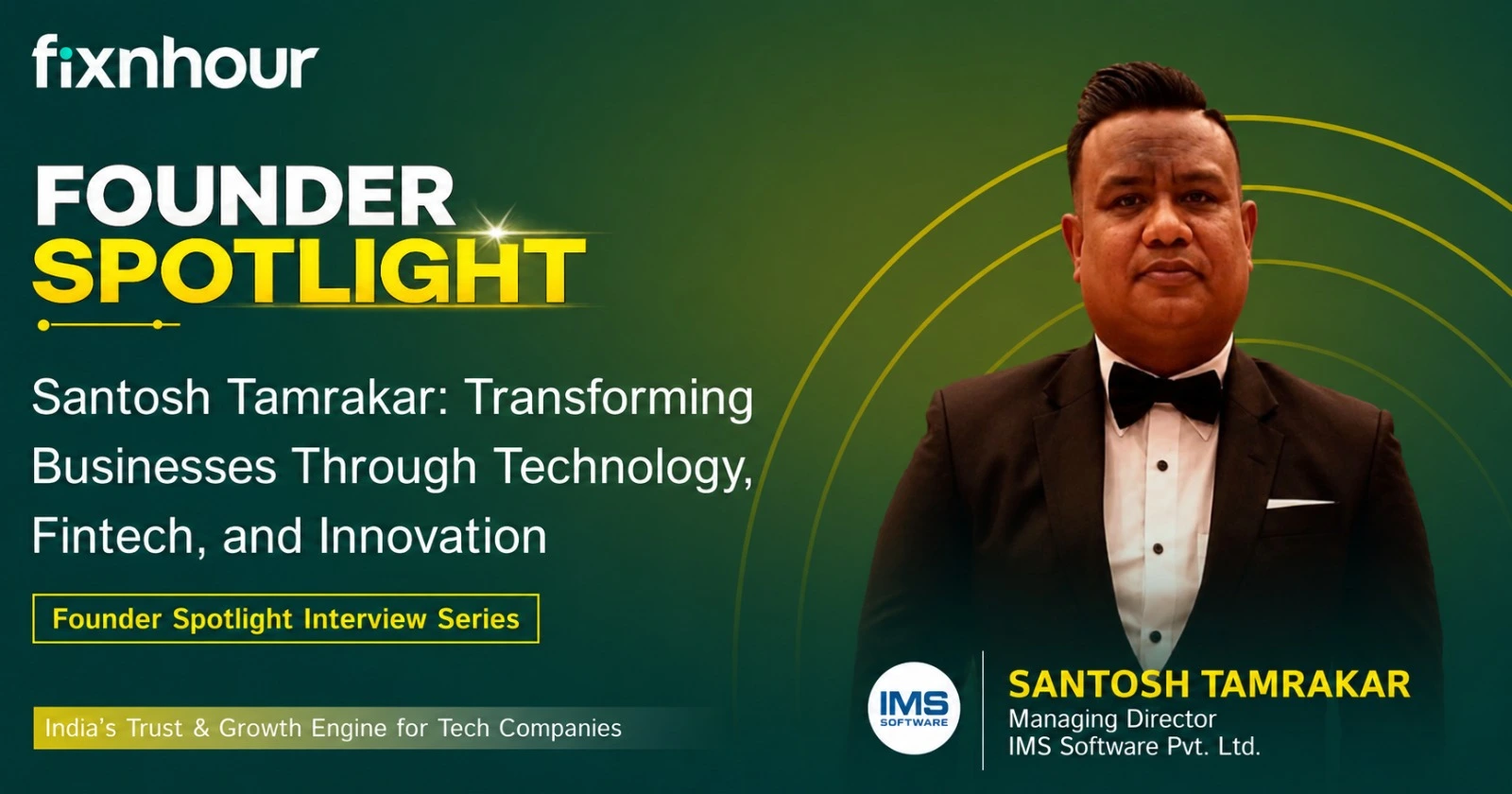
In today’s rapidly evolving digital landscape, innovation is no longer optional—it is essential for business success. Few leaders understand this better than Santosh Tamrakar, a technology and fintech visionary who has dedicated his career to helping organizations embrace transformation and unlock new opportunities. Through his expertise in digital innovation, strategic leadership, and emerging technologies, Santosh has played a pivotal role in driving business growth and operational excellence across industries.
In this exclusive interview, Santosh Tamrakar shares his insights on the future of technology, the impact of fintech on modern businesses, and the strategies organizations can adopt to stay competitive in an increasingly digital world. His journey offers valuable lessons for entrepreneurs, business leaders, and innovators looking to navigate the challenges and opportunities of the modern economy.
Who is Santosh Tamrakar?
For more than 25 years, Santosh Tamrakar has been on a mission to help businesses grow through technology. What began as a career rooted in engineering evolved into a lifelong commitment to solving business challenges, driving innovation, and creating opportunities through digital transformation. Today, Santosh serves as the Managing Director of IMS Software, one of Nepal's leading business software companies. Throughout his journey, he has worked closely with businesses across retail, distribution, hospitality, manufacturing, and enterprise sectors, helping them modernize operations, improve efficiency, and embrace technology as a growth enabler.
Unlike many technology leaders who focus solely on software, Santosh has always been passionate about understanding people, businesses, and the challenges they face. He believes that technology is not an end goal but a tool that empowers organizations to grow, compete, and succeed.
His areas of interest and expertise include:
* Digital Transformation for SMEs
* Fintech & Digital Lending
* Business Process Automation
* Retail & Distribution Technology
* Loyalty & Customer Engagement Platforms
* Data-Driven Decision Making
* Entrepreneurship & Leadership
Beyond business, Santosh Tamrakar is also the host of the podcast "On AIr with Santosh," where he engages with entrepreneurs, innovators, and business leaders to discuss the future of technology, business, finance, and entrepreneurship in Nepal. His philosophy is simple yet powerful: "Technology should not be a privilege reserved for large corporations. Every business deserves access to tools that help them grow, innovate, and succeed." In this exclusive Founder Spotlight Interview, Santosh shares his journey, leadership lessons, views on digital transformation, and vision for the future of business and technology.
Exclusive Interview with Santosh Tamrakar
Q1. Tell us about your journey. How did your passion for technology and entrepreneurship begin?
My journey started as an engineer, but my path into entrepreneurship was far from planned. Like many young professionals, I was looking for opportunities and trying to understand where I could create value. During the early years of my career, I spent a significant amount of time working with businesses and understanding their operational challenges. Over time, I realized that my greatest strength was not simply building technology but understanding problems and finding practical solutions. That realization changed everything. Technology became more than a profession—it became a way to help businesses grow and overcome obstacles. This mindset eventually led me toward entrepreneurship and the mission of empowering businesses through digital solutions.
Q2. What inspired the creation and growth of IMS Software?
The inspiration came from observing how many businesses struggled with inefficient processes and limited access to technology. Many organizations relied heavily on manual operations, spreadsheets, and disconnected systems. These challenges slowed growth and limited their ability to compete effectively. We saw an opportunity to create software solutions that could simplify business operations and improve decision-making. Our goal was straightforward: make technology accessible and useful for businesses of all sizes. Over the years, that vision evolved into a broader mission of supporting business growth through innovation and digital transformation.
Q3. How has Nepal's technology ecosystem evolved over the last two decades?
The transformation has been remarkable. When I started my career, technology adoption was relatively limited. Many businesses viewed software as an optional investment rather than a necessity. Today, the landscape is completely different. Digital payments have become mainstream. Businesses are embracing automation. Cloud technologies are becoming more accessible. Entrepreneurship is growing rapidly. Organizations are increasingly recognizing technology as a strategic asset rather than just an operational tool. Nepal's technology ecosystem has matured significantly, and I believe the next decade will bring even greater opportunities.
Q4. Why are you particularly passionate about helping SMEs embrace digital transformation?
SMEs are the backbone of every economy. They create jobs, drive innovation, and contribute significantly to economic growth. However, many SMEs face resource constraints and struggle to access the same technological advantages available to larger organizations. I believe technology can help bridge that gap. When SMEs adopt the right tools, they become more efficient, more competitive, and more resilient. Helping small and medium businesses grow through technology creates a ripple effect that benefits employees, customers, and entire communities.
Also read: Building a Legacy Beyond Business: An Exclusive Conversation with Dr. Rashid Alleem
Q5. What role does digital transformation play in business growth today?
Digital transformation is no longer optional. Customer expectations have changed. Markets move faster. Competition is more intense. Organizations that fail to embrace technology risk falling behind. Digital transformation enables businesses to improve efficiency, make better decisions, enhance customer experiences, and create new revenue opportunities. However, successful digital transformation is not just about technology. It requires changes in mindset, processes, and organizational culture. Businesses that understand this achieve far better results.
Q6. Fintech is one of your key areas of interest. How do you see fintech shaping the future of business?
Fintech has the power to transform access to financial services. Many businesses, especially SMEs, struggle with access to capital, financial management, and lending opportunities. Digital lending platforms, payment solutions, and intelligent financial systems are helping solve these challenges. The future of business growth will increasingly depend on accessible, efficient, and technology-driven financial services. Fintech is creating opportunities that were previously unavailable to many entrepreneurs and small businesses.
Q7. How important is business process automation in today's environment?
Automation has become essential. As businesses grow, manual processes become difficult to manage and scale. Automation improves efficiency, reduces errors, and allows teams to focus on higher-value activities. The goal is not replacing people. The goal is empowering people to work more effectively. Organizations that successfully automate repetitive processes often see significant improvements in productivity, customer satisfaction, and operational performance.
Q8. What leadership lessons have you learned from leading a technology company for more than two decades?
One of the biggest lessons is that leadership is ultimately about people. Technology changes. Markets evolve. Strategies adapt. But people remain at the center of every successful organization.
Building trust, empowering teams, encouraging innovation, and maintaining a long-term perspective are critical leadership responsibilities. I have also learned that patience is incredibly important. Meaningful growth rarely happens overnight. The best leaders stay focused on creating sustainable value over time.
Q9. What role does data-driven decision-making play in modern businesses?
Data has become one of the most valuable assets available to organizations. However, data alone has limited value. What matters is how businesses use it. Data-driven decision-making helps organizations identify trends, improve operations, understand customers, and reduce uncertainty. Leaders who rely on data are often able to make faster and more informed decisions. As technology continues evolving, data literacy will become increasingly important for businesses of all sizes.
Q10. Through your podcast "On AIr with Santosh," you engage with entrepreneurs and innovators. What insights have you gained from these conversations?
One consistent lesson is that successful people never stop learning. Whether they are entrepreneurs, investors, innovators, or executives, they remain curious. They ask questions. They seek new perspectives. They challenge assumptions. The podcast has reinforced my belief that continuous learning is one of the most important ingredients for long-term success. Every conversation provides new insights and opportunities to grow.
Q11. How do you see Artificial Intelligence impacting businesses in the coming years?
AI will have a transformative impact across industries. Organizations will increasingly use AI to improve decision-making, automate repetitive tasks, personalize customer experiences, and uncover new opportunities. However, I do not believe AI will replace human judgment. The greatest value will come from combining human expertise with intelligent technology. Businesses that learn how to integrate AI effectively will gain significant advantages in efficiency, innovation, and customer engagement.
Q12. Fixnhour is building a trusted ecosystem of technology companies worldwide. How do you think platforms like Fixnhour can help founders and business leaders?
One of the biggest challenges businesses face is finding trustworthy technology partners. The market is crowded with agencies, consultants, software providers, and development companies. Making the right choice can be difficult. Platforms like Fixnhour help create transparency by providing company profiles, founder stories, expertise insights, and business information that allow decision-makers to evaluate potential partners more effectively. I particularly appreciate the focus on founder-led storytelling because people ultimately do business with people. Understanding the vision and values behind a company creates greater trust and confidence.
Q13. What advice would you give businesses when selecting a technology partner?
Don't focus solely on price. Technology decisions often have long-term consequences.
Instead, evaluate partners based on:
* Technical expertise
* Industry experience
* Business understanding
* Communication quality
* Support capabilities
* Cultural alignment
The best technology partners act as strategic advisors rather than service providers. They understand your goals and contribute to your success. That kind of relationship creates far greater value over time.
Q14. What opportunities do you see for Nepal's technology ecosystem in the future?
I believe Nepal has tremendous potential. We have talented professionals, growing entrepreneurial activity, and increasing digital adoption.
Opportunities exist across:
* Fintech
* SaaS
* Artificial Intelligence
* Digital Commerce
* Automation
* Enterprise Software
The key will be investing in education, innovation, and ecosystem development. If we continue moving in the right direction, Nepal can become an important contributor to the regional technology landscape.
Q15. What is your vision for the future?
My vision is simple. I want to continue helping businesses grow through technology. Whether through software, fintech, automation, education, or entrepreneurship, the goal remains the same: create opportunities and enable success. I believe technology should be accessible to everyone, not just large corporations. When businesses have access to the right tools and support, they can innovate, compete, and thrive. That mission continues to inspire me every day.
Final Thoughts
Santosh Tamrakar's journey is a testament to the power of technology, leadership, and purpose-driven entrepreneurship.
Over the last 25 years, he has dedicated himself to helping businesses embrace digital transformation, improve operations, and unlock new opportunities for growth. His work continues to influence Nepal's evolving technology ecosystem and inspire entrepreneurs who believe in the power of innovation. More importantly, his story reminds us that technology is not simply about software. It is about empowering people, solving problems, and creating opportunities.
As businesses continue navigating an increasingly digital future, leaders like Santosh Tamrakar demonstrate how technology can be used not just to improve business performance, but to build a stronger and more inclusive economy. "Today's sunset is tomorrow's sunrise." A philosophy that reflects both his journey and his optimism for the future. contact us today. to learn more about industry leaders, technology trends, and innovative business strategies that can help your organization thrive in the digital age.