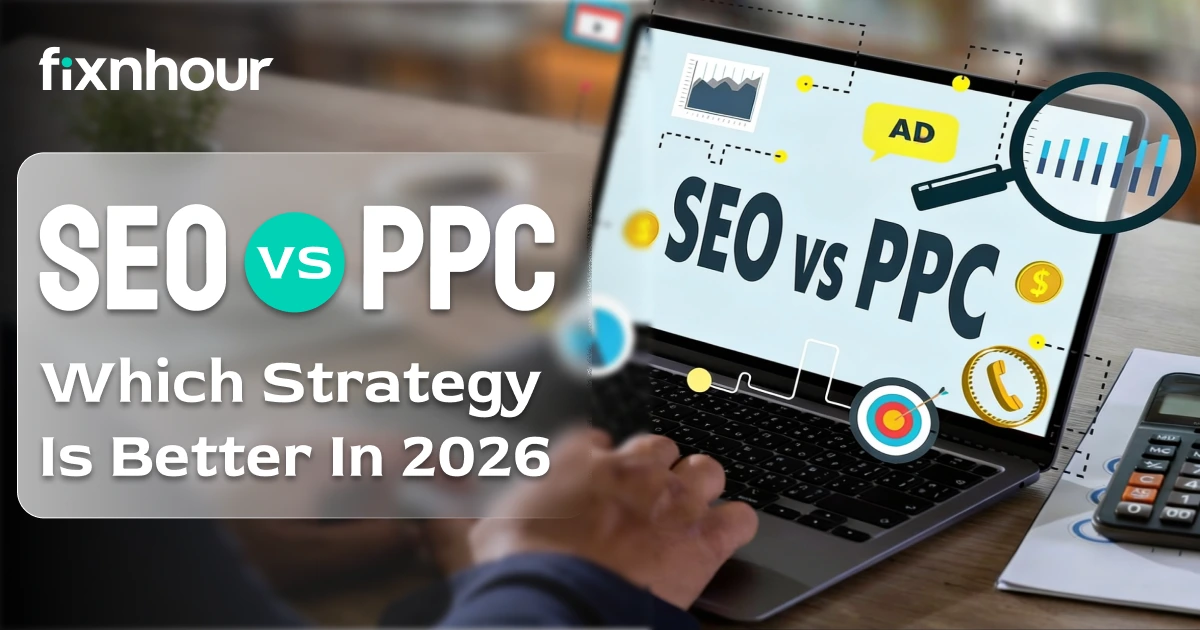
In 2026, digital marketing is driven by AI search, user intent, and data-backed advertising. Businesses mainly rely on two powerful strategies: SEO (Search Engine Optimization) and PPC (pay-per-click advertising). SEO focuses on organic rankings and long-term visibility, while PPC delivers instant traffic through paid ads. Choosing between SEO and PPC depends on business goals, budget, competition, and growth stage. Understanding both strategies helps brands build stronger online presence and maximize ROI in modern search ecosystems.
What is SEO in 2026?
SEO is the process of improving website visibility on search engines like Google without paying for ads. It includes keyword optimization, content creation, backlinks, and technical improvements. In 2026, SEO is more focused on AI search intent, E-E-A-T signals, and user experience.
Key SEO Benefits
- Long-term organic traffic growth
- Higher brand trust and authority
- Cost-effective lead generation
- Sustainable digital visibility
What is PPC in 2026?
PPC is a paid advertising model where businesses pay for each click on their ads. Platforms like Google Ads allow instant visibility at the top of search results. In 2026, PPC is powered by AI bidding, automation, and audience targeting.
Key PPC Benefits
- Instant traffic and visibility
- Highly targeted campaigns
- Fast lead generation
- Scalable advertising strategy
Also read: How to Identify Fake Reviews in B2B Platforms (2026 Guide)
SEO vs PPC: Key Differences
SEO and PPC differ in cost, speed, and sustainability. SEO is free but time-intensive, while PPC requires continuous spending but delivers immediate traffic. SEO builds trust and authority, whereas PPC focuses on instant conversions. SEO is long-term, while PPC is short-term. Both strategies serve different marketing purposes but work best when combined for maximum digital growth and ROI.
|
|
|
|
|
|
|
|
|
|
|
|
|
|
|
|
|
|
|
|
|
|
|
|
|
|
|
|
|
|
|
|
|
|
|
|
|
|
|
|
Also read: Step-by-Step Guide to Listing Your Business Online for Maximum Visibility
Which is better in 2026: SEO or PPC?
There is no single winner between SEO and PPC in 2026. SEO is better for long-term branding, organic traffic, and cost efficiency. PPC is better for instant visibility, lead generation, and product launches. Startups often prefer PPC for quick traction, while established businesses invest in SEO for stability. The best strategy depends on business goals, competition level, and marketing budget allocation. Partner with Fixnhour to create the perfect balance between SEO and PPC and achieve sustainable business growth.
|
|
|
|
|
|
|
|
|
|
|
|
|
|
|
|
|
|
|
|
|
|
|
|
|
|
|
|
|
|
|
|
|
|
|
|
Also read: Why Flutter Is the Best Framework for Fintech App Development in 2026?
SEO vs. PPC: Which Should You Choose?
If your goal is long-term growth, SEO is the best choice because it builds authority and reduces acquisition cost over time. If you need immediate results, PPC is ideal for driving traffic and conversions quickly. Businesses in competitive industries often combine both strategies to balance short-term performance and long-term stability, ensuring maximum digital marketing success.
|
|
|
|
|
|
|
|
|
|
|
|
|
|
|
|
|
|
|
|
|
|
|
|
|
|
|
|
|
|
|
|
|
|
|
|
Hybrid Strategy: SEO + PPC in 2026
The most effective approach in 2026 is combining SEO and PPC. PPC provides instant data and leads, while SEO builds long-term organic visibility. Businesses use PPC insights to improve SEO keyword targeting. Together, they increase conversions, brand visibility, and ROI. This integrated strategy reduces dependency on a single channel and strengthens overall digital marketing performance across search engines.
- Balanced short-term and long-term growth: PPC delivers instant traffic and leads, while SEO builds sustainable organic visibility for long-term ROI.
- Better keyword intelligence: PPC data helps identify high-converting keywords that can be optimized in SEO content strategies.
- Improved conversion rates: Retargeting PPC audiences through SEO content increases trust and boosts overall conversions.
- Maximized search visibility: Combining both strategies ensures your brand appears in both paid ads and organic search results.
- Smarter budget optimization: Businesses can reduce PPC spend over time by strengthening SEO performance and organic rankings.
Also read: AI Adoption and Usage: Trends, Benefits, Challenges & Future Outlook (2026 Guide)
Future of SEO and PPC
In 2026, SEO and PPC are evolving rapidly with the integration of AI, voice search, and advanced automation. SEO now focuses more on semantic search, understanding user intent, and delivering high-quality, value-driven content that aligns with search behavior. On the other hand, PPC leverages AI-driven bidding, predictive targeting, and real-time performance optimization to maximize ROI.
Both strategies are becoming increasingly data-driven and personalized, enabling businesses to reach the right audience at the right time. Companies that embrace these innovations and adapt quickly will lead in search rankings and advertising performance in the future digital ecosystem. Contact Us today
- AI-driven search optimization: SEO will rely heavily on AI algorithms that understand user intent, context, and semantic search rather than just keywords.
- Automation in PPC campaigns: PPC platforms like Google Ads will use advanced AI bidding, auto-targeting, and real-time budget optimization for better ROI.
- Voice and conversational search growth: SEO strategies will shift toward voice search optimization and natural language queries.
- User experience as a ranking factor: Website speed, mobile UX, and engagement metrics will play a bigger role in SEO rankings and ad quality scores.
- Integrated marketing strategies: Businesses will combine SEO + PPC with data sharing between both channels for higher conversions and smarter targeting.
Frequently Asked Questions
Q1. Is SEO better than PPC in 2026?
Ans. SEO is better for long-term organic growth and sustainable traffic, while PPC is better for instant visibility and quick conversions. In 2026, businesses prefer SEO for brand authority and cost efficiency. However, PPC remains powerful for competitive industries and product launches. The best approach depends on your goals—SEO for long-term success and PPC for immediate marketing impact and lead generation.
Q2. How does PPC help businesses in 2026?
Ans. PPC helps businesses get instant traffic by placing ads at the top of search results. It uses AI-driven targeting, audience segmentation, and smart bidding strategies. In 2026, PPC is highly effective for generating leads, promoting offers, and increasing sales quickly. It is especially useful for startups and eCommerce brands that need immediate visibility, measurable results, and scalable marketing campaigns with controlled budgets.
Q3. How long does SEO take to show results?
Ans. SEO typically takes 3 to 6 months to show noticeable results depending on competition, keywords, and website authority. In 2026, AI search algorithms prioritize quality content, user experience, and relevance. While SEO is slow initially, it delivers long-term benefits such as consistent organic traffic, higher rankings, and strong brand authority, making it a powerful investment for sustainable digital marketing growth.
Q4. Can small businesses rely only on SEO?
Ans. Yes, small businesses can rely on SEO, especially for long-term growth and cost-effective marketing. SEO helps attract organic traffic without paying for ads. However, in competitive industries, combining SEO with PPC gives better results. In 2026, small businesses use SEO to build authority while using PPC for quick leads. This balanced strategy improves visibility, conversions, and overall online presence efficiently.
Q5. Is PPC still effective in 2026?
Ans. Yes, PPC is highly effective in 2026 due to advanced AI optimization, better audience targeting, and improved conversion tracking. It allows businesses to appear instantly on top of search results and reach potential customers quickly. PPC is widely used for product launches, promotions, and competitive markets. Despite rising ad costs, it still delivers strong ROI when campaigns are properly optimized and managed.
Q6. What is the ROI of SEO vs PPC?
Ans. SEO offers higher long-term ROI because it generates free organic traffic over time. PPC provides faster but short-term ROI since it depends on continuous ad spending. In 2026, businesses track ROI using AI analytics and conversion data. SEO is more cost-efficient in the long run, while PPC delivers immediate measurable returns. The best ROI comes from using both strategies together strategically.
Q7. Should businesses use both SEO and PPC?
Ans. Yes, using both SEO and PPC is the most effective digital marketing strategy in 2026. PPC delivers instant traffic and data insights, while SEO builds long-term organic visibility. Together, they improve keyword performance, conversion rates, and brand awareness. This hybrid approach reduces risk, increases market reach, and ensures continuous traffic flow from both paid and organic search channels.
Q8. Which is better for lead generation: SEO or PPC?
Ans. PPC is better for instant lead generation because it targets high-intent users and delivers quick results. SEO, on the other hand, generates long-term high-quality leads through organic search visibility. In 2026, businesses often use PPC for immediate leads and SEO for sustainable pipeline growth. Combining both strategies ensures maximum lead generation, better conversion rates, and stronger digital marketing performance.