ERP software has emerged as a vital investment for companies seeking to streamline their processes, boost productivity, and make informed decisions. ERP systems connect various business processes like finance, human resources, inventory, sales, procurement, and customer relationship management in one system, therefore removing business data silos and streamlining the workflow. But the key to the success of an ERP rollout is selecting the right partner. The best ERP software development companies not only have technical know-how, but also a grasp of your industry, the ability to create scalable and secure solutions, and support that will help your business grow. The choice of the right company can make a huge difference in your ROI, whether you're a startup looking for a cost-effective ERP solution or a large enterprise that needs a fully customized platform.
We will talk about some of the best ERP software development firms, their main advantages, the price of ERP software development, the advantages of ERP software, how to choose the right ERP software, and the current ERP trends of 2026. At the end of the day, you'll be in a position to research the market and decide on the best ERP development partner for your business.
Key Takeaways
- ERP centralizes all business operations in one system.
- Custom ERP software fits unique business workflows.
- Cloud ERP is becoming the preferred deployment model.
- AI-powered ERP improves forecasting and automation.
- Integration capabilities are as important as features.
- Choosing the right development partner reduces implementation risks.
- Ongoing support is critical for long-term success.
- Comparing multiple vendors helps maximize ROI.
Quick Answer:
The best ERP software development firms are experts in crafting personalized, scalable, and secure ERP solutions to optimize business operations. They provide knowledge and skills in cloud technologies, AI integration, data security, and industry solutions. The best partner to develop an ERP system recognizes the requirements of your business, provides consistent support and generates a system that scales with your business.
Also Read: Software Testing Companies in India Pricing Guide 2026
Understanding ERP Software Before You Choose a Development Company
It's essential to grasp the workings of an ERP system and its benefits prior to engaging an ERP software development company. ERP software integrates various departments such as inventory, sales, HR, and finance into a single system. An understanding of your business needs, industry challenges and future goals will help you select a solution that will provide sustainable value and operational efficiencies.
What is ERP Software?
ERP (Enterprise Resource Planning) is a single central business administration software for companies that combines departments such as finance, HR, stock, sales, and operations. It simplifies processes, enhances teamwork, and provides real-time data that aids in informed decision-making.
How Does an ERP System Work?
An ERP system gathers all information from various departments in one database, which enables information to be shared across the enterprise. This enables better communication, automates actions, decreases manual tasks and boosts operation effectiveness.
Common ERP Modules Every Business Should Know
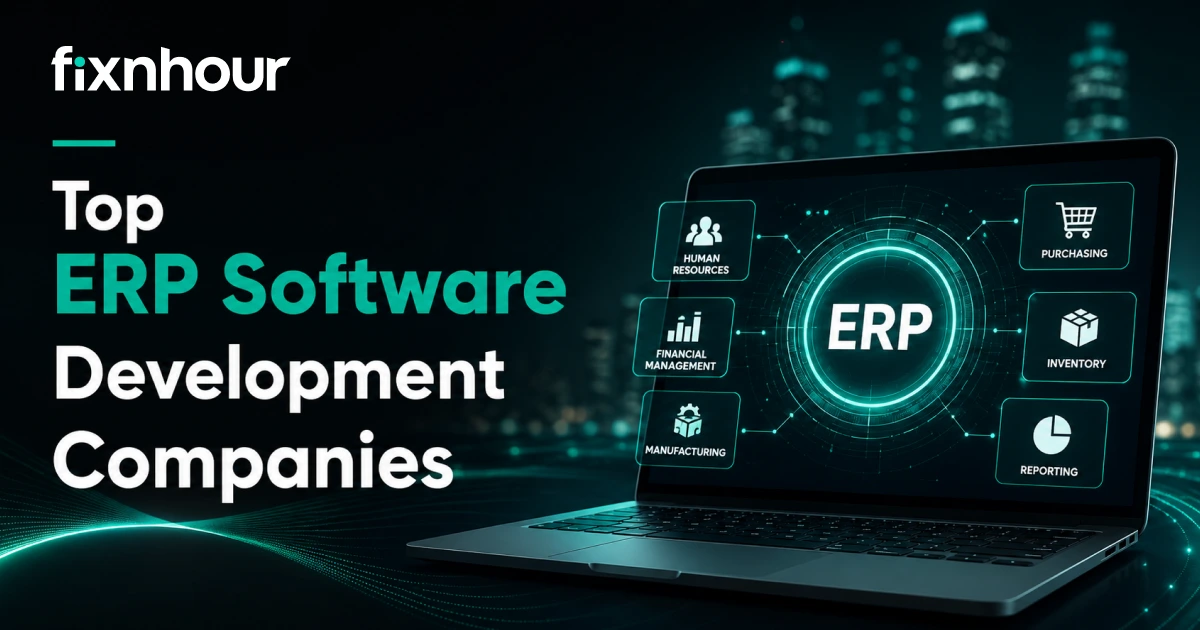
To run the daily operations of a business efficiently, most ERP systems are equipped with important modules like finance, accounting, inventory management, human resource, procurement, sales, CRM, manufacturing, supply chain management and reporting.
Who Needs Custom ERP Software?
Businesses with industry-specific needs, complex operations, or workflows that are different from the standard ones will benefit from custom ERP software. Tailored ERP solutions enhance efficiency and scalability, working their way into the hearts of growing startups, SMEs, manufacturers, healthcare providers, retailers, and enterprises.
Top ERP Software Development Companies Worth Considering
The best ERP software development firms provide customized ERP systems that can streamline business operations and boost productivity. They have technical competencies, industry knowledge and use modern technologies to create sound enterprise systems. By evaluating their experience, technology, client feedback, pricing, and support offerings, businesses can effectively choose the right partner to ensure a successful ERP software development project and sustainable digital transformation.
1. ScienceSoft
ScienceSoft is a trusted ERP software development company with decades of experience delivering custom enterprise solutions. It helps businesses automate operations, improve productivity, and integrate ERP systems with existing business applications.
- 35+ years of software development experience
- Custom ERP development and modernization
- Cloud and on-premise ERP solutions
- Strong focus on security and compliance
- Industries: Healthcare, Manufacturing, Retail, Logistics
2. Chetu
Chetu provides custom ERP software development services for businesses of all sizes. Its team builds scalable ERP solutions tailored to unique business processes while supporting seamless integrations and long-term digital transformation.
- Industry-specific ERP development
- Microsoft Dynamics and SAP expertise
- API and third-party integrations
- Dedicated development teams
- Global client base across multiple industries
3. Fingent
Fingent develops enterprise-grade ERP software that helps organizations streamline workflows, improve collaboration, and manage business operations efficiently. The company focuses on scalable, secure, and future-ready ERP solutions.
- Custom ERP consulting and development
- Cloud-based enterprise applications
- AI and automation integration
- Strong post-launch support
- Experience across healthcare, finance, and education
4. BairesDev
BairesDev delivers high-quality ERP software development services using experienced engineering teams. Its solutions help businesses optimize processes, improve operational visibility, and accelerate digital transformation through customized enterprise applications.
- Custom ERP application development
- Agile development methodology
- Cloud-native enterprise solutions
- Enterprise system integrations
- Experienced global engineering teams
5. SparxIT
SparxIT offers custom ERP software development designed to simplify business management and improve productivity. The company develops secure and scalable ERP systems tailored to industries including healthcare, logistics, retail, and manufacturing.
- Custom enterprise software solutions
- Cloud-based ERP development
- Mobile ERP applications
- API and third-party integrations
- Ongoing maintenance and support
Also Read: AI Product Development Companies: Complete Cost & Pricing Guide
How to Choose the Right ERP Software Development Company
Choosing the best ERP development company involves more than just looking at pricing. Critically review their experience of the industry, their technical skills, their communication process, their development process and their post launch support. Looking at previous ERP projects, client reviews and portfolio can be helpful. A trusted partner knows your business goals and provides scalable, secure and future-proof ERP software solutions.
- Have they built ERP software for your industry?
- Which technologies do they use?
- Can they integrate with existing software?
- What support is included after launch?
- How do they manage security and compliance?
- What is their development methodology?
Benefits of Hiring an Experienced ERP Development Company
When you hire an ERP software development firm that has a wealth of experience in the industry, you'll have industry best practices, proven methodologies, and technical expertise to your project. They decrease implementation hazards, enhance system performance, guarantee secure integrations, and deliver ongoing support. Faster workflows, better decision-making, increased productivity, reduced operating expenses, and software that grows with the business are just a few of the advantages businesses reap from implementing faster workflows.
Looking for a trusted ERP development partner? Fixnhour makes your search easier by connecting you with verified ERP software development companies, complete with authentic reviews, company comparisons, and detailed profiles to help you choose the right technology partner with confidence.
Better Business Process Automation
Custom ERP software eliminates repetitive tasks, streamlines workflows and minimizes manual errors. It enables businesses to streamline their processes, boost productivity, and maintain a unified approach to operations across different departments.
Improved Operational Efficiency
ERP systems can integrate departments in a single platform, which in turn allows for quicker communication, better use of resources, and a smoother workflow. This helps to enhance productivity, minimize delays, duplication and operational limitations.
Real-Time Reporting and Smarter Decisions
Modern ERP solutions offer real-time dashboards, analytics and business insight. They can accurately track performance, recognize trends, predict outcomes and make informed decisions with accurate and current data.
Long-Term Business Scalability
A scalable ERP system can grow with your company, adding new users, locations, and processes with minimal disruptions. It enables organisations to grow at the right pace without compromising on delivering consistent operation and performance.
Additional Business Advantages
In addition to automation, ERP software boosts collaboration, fortifies data security, elevates customer service, aids in regulatory compliance, and cuts down on operational costs, all leading to sustainable growth and competitiveness.
ERP Development Process: From Idea to Deployment
The ERP system development consists of several stages that need to be taken into account in a proper manner and these stages include careful planning, requirement analysis, design, development, testing, deployment and ongoing maintenance. Each phase plays a vital role in creating software that meets the requirements of businesses and users. When working with a highly experienced development company, you can benefit from efficient project management, smooth project implementation, quality assurance, and ongoing improvements after going live with the ERP system.
Step 1 – Business Requirement Discovery
The project begins by understanding business goals, workflows, challenges, and user requirements. This discovery phase helps define the ERP scope and creates a solid foundation for successful development.
Step 2 – ERP Planning and Solution Architecture
Developers design the system architecture, select the appropriate technology stack and develop an elaborate project roadmap that ensures seamless future integrations, scalability, security, and performance.
Step 3 – UI/UX Design and Workflow Mapping
The user-friendly interface and efficient workflows are designed to make daily operations easier, more user-friendly, and ensure that employees can easily navigate and adopt the ERP system.
Step 4 – ERP Software Development
Custom ERP modules are created for the desired business requirements using modern technologies, coding standards are adhered to for performance, security and reliability and business logic is added as per the need of the business.
Step 5 – Third-Party Integrations
The ERP system can connect with other applications, such as customer relationship management (CRM), accounting software, payment processing systems, and other business applications in order to facilitate seamless data flow and improve operations.
Step 6 – Testing and Quality Assurance
Full testing checks for bugs, security flaws and performance problems prior to deployment. Quality assurance is a technique that ensures the ERP system runs smoothly, securely, and fulfills all business needs.
Step 7 – Deployment and Employee Training
Once the testing is done successfully, the ERP system is deployed to the live environment. Staff are provided with training to enable them to understand features, enhance uptake and run the service day-to-day.
Step 8 – Maintenance and Continuous Improvement
The ERP system's reliability, security, and ability to meet changing business requirements and technological advancements are ensured through regular maintenance, security updates, performance monitoring, and feature enhancements.
Also Read: IT Services Pricing Guide 2026: Costs, Pricing Models.
How Much Does ERP Software Development Cost?
The price of ERP software development depends on various factors such as the size of the business, complexity of the project, the need for customization, integration with other applications, deployment model, and the level of support required. For small businesses, simpler systems might be more appropriate, whereas enterprises demand more advanced features and scalability. By knowing the costs up front, businesses can allocate budgets effectively and select ERP solutions that offer solid long-term value, and measurable returns.
| Business Size | Estimated Development Cost (USD) | Typical Timeline | Best For |
|---|---|---|---|
| Small Business ERP | $15,000 – $50,000 | 2–4 months | Startups and small businesses |
| Mid-Sized Business ERP | $50,000 – $150,000 | 4–8 months | Growing companies with multiple departments |
| Enterprise ERP | $150,000 – $500,000+ | 8–18 months | Large organizations with complex operations |
| Cloud ERP Solution | $20,000 – $200,000+ | 3–9 months | Businesses seeking scalability and remote access |
| Industry-Specific Custom ERP | $50,000 – $300,000+ | 6–12 months | Healthcare, manufacturing, retail, logistics, etc. |
Best Practices for a Successful ERP Project
Stakeholder participation, thorough planning, well-defined business goals, frequent testing and monitoring, and careful planning are all crucial components of a successful ERP project. Selecting scalable technologies, focusing on the user experience, ensuring robust cybersecurity measures, and delivering workforce training help set the stage for future success. By adhering to industry standards, risks are reduced, and the ERP system will provide tangible benefits in terms of business performance and efficiency.
- Define clear KPIs
- Prioritize user experience
- Choose scalable architecture
- Document workflows
- Schedule regular updates
- Monitor system performance
- Collect employee feedback
Also Read: How Much Does It Cost to Build a Custom CRM Software in 2026?
Final Thoughts:
Selecting the right ERP software development company can be a strategic investment that can revolutionize the way your business works. Partnering with a trusted supplier that offers experience, scalability, robust security measures, and post-launch support can ensure you have an ERP system that boosts efficiency, streamlines processes, and drives future growth. Spend time researching providers, clarifying your business needs and getting the best investment in a solution for the future.
Contact us today to connect with trusted ERP software development companies and find the perfect technology partner for your business needs.
Frequently Asked Questions
Q1. Which are the best ERP software development companies for small businesses?
Ans. The best ERP software development companies for small businesses are those that offer scalable, cost-effective, and customizable solutions. Look for providers with experience in your industry, strong client reviews, cloud ERP expertise, and reliable post-launch support. A good development partner should understand your business goals, deliver user-friendly software, and provide seamless integrations with existing tools. Comparing multiple vendors helps you find a solution that fits your budget while supporting future business growth.
Q2. How much does custom ERP software development cost in 2026?
Ans. The cost of custom ERP software development in 2026 depends on factors such as project complexity, business size, required features, integrations, and deployment type. Small business ERP solutions generally cost less than enterprise-grade systems with advanced functionality. Additional expenses may include cloud hosting, maintenance, security, and ongoing support. Requesting detailed project estimates from multiple ERP development companies allows businesses to compare pricing and choose a solution that offers the best long-term value.
Q3. How long does it take to build a custom ERP system?
Ans. Building a custom ERP system typically takes anywhere from a few months to over a year, depending on project requirements. Simpler ERP solutions with limited modules can be completed faster, while enterprise systems with multiple integrations require more time. The development process includes planning, design, coding, testing, deployment, and employee training. Proper project management, clear communication, and experienced developers help ensure timely delivery without compromising software quality or performance.
Q4. Should I choose cloud ERP or on-premise ERP for my business?
Ans. The choice between cloud ERP and on-premise ERP depends on your business needs and budget. Cloud ERP offers lower upfront costs, automatic updates, remote accessibility, and easy scalability, making it ideal for growing businesses. On-premise ERP provides greater control over infrastructure and data but requires higher initial investment and ongoing maintenance. Businesses should evaluate security requirements, IT resources, operational flexibility, and long-term goals before selecting the most suitable ERP deployment model.
Q5. What features should a modern ERP solution include?
Ans. A modern ERP solution should include modules for finance, inventory, human resources, customer relationship management, procurement, reporting, and analytics. It should also support cloud deployment, mobile access, AI-powered automation, real-time dashboards, third-party integrations, and strong cybersecurity. Scalability, user-friendly interfaces, and customizable workflows are equally important. These features enable businesses to improve productivity, streamline operations, and make data-driven decisions while adapting to future growth and technological advancements.
Q6. How do ERP software development companies customize solutions for different industries?
Ans. ERP software development companies customize solutions by understanding each industry's unique workflows, regulations, and operational challenges. They design industry-specific modules, integrate specialized tools, and automate business processes based on client requirements. Whether serving manufacturing, healthcare, retail, logistics, or education, developers tailor features, reports, and user roles to improve efficiency. This personalized approach ensures businesses receive an ERP system that aligns with their operations, compliance requirements, and long-term objectives.
Q7. What should I look for before hiring an ERP software development company?
Ans. Before hiring an ERP software development company, evaluate its industry experience, technical expertise, portfolio, client testimonials, and communication process. Ask about development methodologies, security standards, scalability, integration capabilities, and post-launch support. Ensure the company understands your business objectives and provides transparent pricing with realistic timelines. Choosing a partner with proven ERP implementation experience reduces project risks and increases the likelihood of delivering a successful, future-ready enterprise solution.
Q8. Why should businesses choose custom ERP software instead of ready-made ERP solutions?
Ans. Custom ERP software is designed specifically for your business processes, making it more flexible and efficient than ready-made solutions. It eliminates unnecessary features, supports unique workflows, integrates seamlessly with existing systems, and scales as your business grows. Although custom ERP may require a higher initial investment, it provides greater long-term value through improved productivity, better user adoption, enhanced security, and the ability to adapt quickly to changing business requirements.