Marketplace apps have transformed how buyers discover products and how sellers reach customers online. From multi-vendor ecommerce platforms to service marketplaces, these apps connect multiple parties through one digital ecosystem. But before investing in development, businesses need to understand the marketplace app development cost in 2026, required features, technology choices, and ongoing expenses.
The final cost depends on several factors, including app complexity, buyer and seller functionality, UI/UX design, backend architecture, payment integrations, third-party APIs, security requirements, and development location. A basic marketplace may require a relatively modest investment, while an advanced platform with AI, real-time communication, analytics, and automation can cost considerably more.
Key Takeaways
- Buyer, seller, and admin features influence development cost.
- An MVP is generally more affordable than a feature-rich marketplace.
- Payment, shipping, maps, and analytics integrations add development effort.
- iOS, Android, web, or cross-platform development affects the budget.
- UI/UX quality directly influences engagement and conversion.
- Security and scalability should be planned from the beginning.
- Maintenance is an ongoing part of the marketplace investment.
Statistics & Market Insights for Marketplace Apps
Marketplace platforms continue to attract businesses because they can connect multiple sellers with large customer audiences through one digital ecosystem.Website Development Pricing in India Mobile commerce, digital payments, personalized recommendations, and convenient shopping experiences are influencing marketplace growth. Businesses are therefore investing in scalable applications that can support increasing users, transactions, vendors, and product catalogs.
Marketplace Industry Growth and Consumer Adoption
Online marketplaces provide customers with variety and convenience while giving sellers access to established audiences. Mobile-first purchasing, digital wallets, personalized discovery, and faster fulfillment are strengthening marketplace adoption across ecommerce and service industries.
Why Businesses Are Investing in Marketplace Platforms
- Multiple vendors can operate through one platform.
- Marketplace owners can generate revenue through commissions and subscriptions.
- Buyers can compare products and sellers easily.
- Sellers gain access to broader customer audiences.
- Automated analytics help businesses understand marketplace performance.
What Features Should a Marketplace App Have?
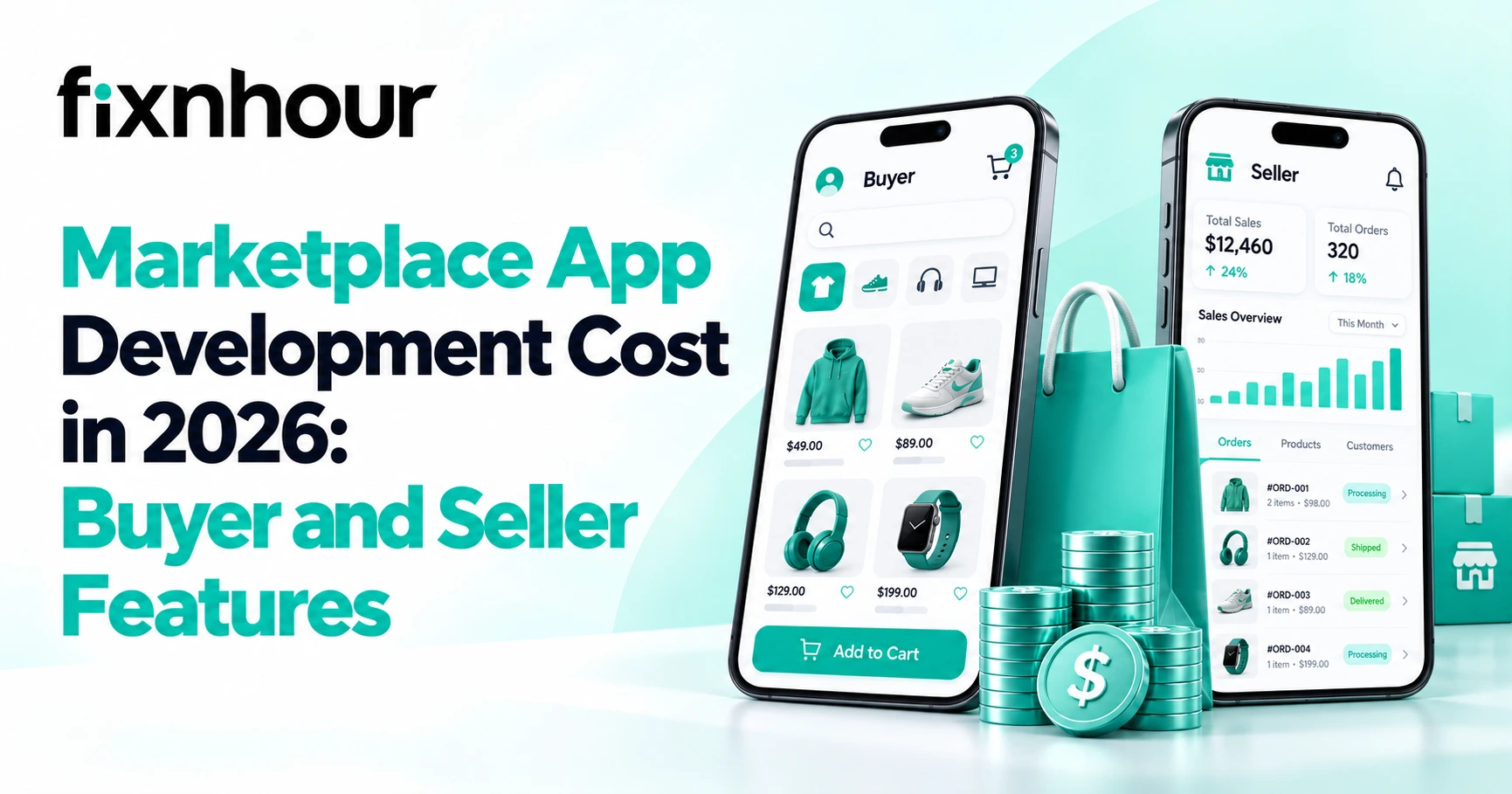
The features of a marketplace application depend on its business model, but three core interfaces are usually required: buyer, seller, and admin.Android App Development Trends Businesses A successful marketplace should make product discovery, selling, payments, order management, communication, and platform administration simple while maintaining security, performance, and a consistent user experience.
Essential Buyer Features
A buyer should be able to discover products or services, evaluate sellers, complete transactions, and track orders without unnecessary steps.
- Registration and social login
- Product and service search
- Categories and filters
- Product details
Essential Seller Features
Seller functionality should make it easy to manage products, orders, customers, inventory, pricing, and earnings from a centralized dashboard.
- Seller registration and verification
- Seller profile
- Product listing management
- Inventory management
- Order management
- Pricing and discount controls
Admin Panel Features
The admin panel gives marketplace owners control over the entire ecosystem.
- Buyer and seller management
- Product and category management
- Commission management
- Payment monitoring
- Vendor verification
Marketplace App Development Cost Based on App Complexity
Marketplace development costs vary significantly according to application complexity. A basic marketplace focuses on essential buying and selling functions, while a medium-level platform introduces advanced integrations and analytics.Software Development Cost Calculator by Country An enterprise marketplace can include artificial intelligence, real-time communication, automation, multilingual functionality, multiple currencies, and sophisticated backend infrastructure.
Basic Marketplace App
A basic marketplace MVP generally includes registration, product listings, search, cart, checkout, seller management, and a simple administration panel. It is suitable for startups testing their business model before making a larger technology investment.
Medium-Complexity Marketplace App
A medium marketplace can include advanced search, reviews, seller analytics, payment gateway integration, push notifications, order tracking, and customized dashboards. This approach provides a stronger foundation for businesses that already understand their target market.
What Factors Affect Marketplace App Development Cost?
Several technical and business decisions determine the final marketplace development budget.UI/UX Design Agency Pricing The number of platforms, feature complexity, design requirements, backend architecture, integrations, development team, testing, security, and post-launch maintenance can all influence the total investment.
Platform and Technology Selection
Developing separate native applications for iOS and Android may require more resources than using a cross-platform framework. Businesses should select technology according to performance requirements, target users, scalability expectations, and long-term maintenance needs.
UI/UX Design and Customization
Professional UI/UX design improves usability and conversion. Costs can include:
- User research
- Wireframes
- Prototypes
- Design systems
- Buyer interface
Third-Party Integrations
Marketplace applications frequently connect with external services such as payment gateways, shipping providers, maps, analytics platforms, CRM systems, cloud services, and communication APIs. Each integration requires development, testing, security validation, and ongoing compatibility management.
Development Team and Location
Development costs can differ based on whether you hire freelancers, an in-house team, a local agency, or an offshore development company. Developer expertise, project management, technical specialization, and communication requirements also influence the overall budget.
Marketplace App Development Process: Step-by-Step
A structured development process helps control costs and reduces technical risks.Accounting & Bookkeeping Pricing Guide for Small Businesses Instead of immediately building every possible feature, businesses should validate their marketplace concept, identify the most important user requirements, create an MVP, test the product, and gradually introduce advanced capabilities based on customer feedback.
| Step | Development Stage | Key Activities |
|---|---|---|
| Step 1 | Define the Marketplace Business Model | Choose B2B, B2C, C2C, service, or multi-vendor model; identify buyers, sellers, and admins; define commissions, subscriptions, transaction fees, goals, and value proposition. |
| Step 2 | Research Users and Competitors | Analyze target users, competitor features, pricing strategies, customer pain points, purchasing behavior, market gaps, and opportunities for differentiation. |
| Step 3 | Plan Buyer, Seller, and Admin Features | Define buyer registration, search, cart, checkout, seller listings, inventory, orders, earnings, admin dashboards, approvals, and reporting features. |
| Step 4 | Create UI/UX Design and Prototype | Develop user journeys, navigation flows, wireframes, interactive prototypes, and responsive interfaces to improve usability and validate the marketplace experience. |
| Step 5 | Develop the Marketplace App | Build frontend and backend systems, configure databases and APIs, develop buyer/seller/admin dashboards, and implement core marketplace workflows. |
| Step 6 | Integrate Payments and APIs | Integrate payment gateways, wallets, shipping systems, maps, notifications, communication APIs, analytics, and other third-party services. |
| Step 7 | Test Security, Performance, and Usability | Conduct functional, integration, security, performance, compatibility, user acceptance, and usability testing before launching the marketplace. |
Step 1 — Define the Marketplace Business Model
Define the marketplace structure by identifying the target audience, transaction model, revenue strategy, and business objectives. A clear model helps determine the platform’s features, workflows, technology requirements, and long-term scalability.
- Choose B2B, B2C, C2C, service, or multi-vendor model.
- Identify buyers, sellers, and marketplace administrators.
- Define commissions, subscriptions, or transaction fees.
- Establish business goals and marketplace value proposition.
Step 2 — Research Users and Competitors
Research target users and competing marketplaces to understand customer expectations, purchasing behavior, pricing strategies, popular features, and market gaps. These insights help create a differentiated and user-focused marketplace experience.
- Analyze target audience needs and preferences.
- Study competitor features and pricing models.
- Identify customer pain points and marketplace gaps.
- Define opportunities for competitive differentiation.
Step 3 — Plan Buyer, Seller, and Admin Features
Plan essential features according to each marketplace user type. Separating buyer, seller, and administrator requirements ensures smooth workflows, clear responsibilities, efficient management, and a better overall platform experience.
- Define buyer registration, search, cart, and checkout features.
- Plan seller listings, inventory, orders, and earnings.
- Include admin dashboards, approvals, and reporting.
- Prioritize features based on business requirements.
Step 4 — Create UI/UX Design and Prototype
Design intuitive marketplace interfaces that simplify browsing, purchasing, selling, and administration. Create user flows, wireframes, and interactive prototypes to validate navigation and usability before beginning full-scale application development.
- Create user journeys and navigation flows.
- Develop wireframes for important marketplace screens.
- Build interactive prototypes for testing.
- Design responsive and user-friendly interfaces.
Step 5 — Develop the Marketplace App
Transform approved designs into a functional marketplace application using suitable frontend, backend, database, and API technologies. Development focuses on secure transactions, scalable architecture, reliable performance, and seamless buyer-seller interactions.
- Develop frontend interfaces and backend services.
- Configure databases and marketplace APIs.
- Build buyer, seller, and admin dashboards.
- Implement core marketplace workflows and functionality.
Step 6 — Integrate Payments and APIs
Connect essential third-party services to create a complete marketplace ecosystem. Payment gateways, shipping providers, maps, notifications, and analytics integrations help automate transactions, improve user convenience, and support effective platform management.
- Integrate secure payment gateways and wallets.
- Connect shipping and delivery management systems.
- Add maps, notifications, and communication APIs.
- Implement analytics and tracking tools.
Step 7 — Test Security, Performance, and Usability
Test the marketplace thoroughly before launch to identify technical issues, security vulnerabilities, usability problems, and performance limitations. Comprehensive testing ensures reliable functionality and provides users with a secure, smooth, and consistent experience.
- Perform functional and integration testing.
- Conduct security and vulnerability testing.
- Check speed, scalability, and device compatibility.
- Complete user acceptance and usability testing.
Benefits of Building a Marketplace App
A marketplace app can create value for platform owners, buyers, and sellers simultaneously.Web Design Company Pricing Guide The model allows multiple businesses or individuals to operate within one ecosystem while customers gain convenient access to products or services. With appropriate monetization and scalable technology, marketplace businesses can expand without managing every product themselves.
Benefits for Marketplace Owners
- Multiple revenue opportunities
- Seller commissions
- Subscription plans
- Advertising revenue
Benefits for Buyers
- Multiple sellers in one application
- Convenient product comparison
- Personalized recommendations
Benefits for Sellers
- Access to new customers
- Centralized product management
- Digital order processing
Conclusion
For startups, launching a focused MVP can be a practical way to validate the business model without spending heavily on advanced functionality from day one. Established businesses may benefit from a more sophisticated platform with analytics, AI recommendations, automation, multiple payment options, and scalable infrastructure.
The most effective approach is to define the marketplace model clearly, prioritize buyer and seller needs, select the right technology, and work with an experienced development team. A well-planned marketplace app can provide a strong foundation for sustainable growth, recurring revenue, and long-term customer engagement. Talk to our experts
Frequently Asked Questions
1. How much does it cost to develop a marketplace app in 2026?
Ans. Marketplace app development can cost approximately $25,000 to $150,000 or more, depending on features, platforms, UI/UX complexity, integrations, security requirements, and development location. A basic MVP requires fewer resources, while an advanced multi-vendor marketplace with AI, analytics, real-time communication, and complex backend infrastructure requires a larger investment.
2. How much does it cost to build a multi-vendor marketplace app?
Ans. A multi-vendor marketplace generally costs more than a single-vendor ecommerce application because it requires separate seller onboarding, vendor dashboards, product management, commissions, payouts, seller analytics, order management, and administration tools. The exact budget depends on the number of platforms, integrations, customization requirements, and complexity of the marketplace business model.
3. What features should a buyer and seller marketplace app include?
Ans. A buyer marketplace app should provide registration, search, filters, product details, reviews, wishlist, cart, checkout, payments, order tracking, and notifications. Sellers need registration, verification, product listings, inventory management, order management, pricing controls, earnings, analytics, and customer communication. The admin panel should manage users, sellers, products, payments, commissions, and disputes.
4. How long does it take to develop a marketplace app?
Ans. Marketplace development can take several months depending on the application's complexity, platforms, number of features, design requirements, integrations, testing, and team size. An MVP can generally be delivered faster than a fully customized marketplace. Businesses should define priorities early and use an incremental development strategy to launch core functionality sooner.
5. What is the cost of developing a marketplace app for Android and iOS?
Ans. Developing marketplace applications for both Android and iOS can increase the overall budget compared with building for one platform. Cross-platform development may help reduce duplicated development effort, while native development can be preferable for applications requiring highly platform-specific performance or functionality. The best approach depends on the target audience and technical requirements.
6. How can I reduce marketplace app development costs?
Ans. Businesses can reduce development expenses by starting with an MVP, prioritizing essential buyer and seller features, using reusable components, selecting suitable cross-platform technologies, and avoiding unnecessary integrations during the initial launch. Instead of building every advanced feature immediately, companies can analyze customer feedback and gradually introduce AI, automation, analytics, and other enhancements.
7. How much does it cost to maintain a marketplace app after launch?
Ans. Marketplace maintenance costs depend on application complexity, infrastructure, user volume, third-party services, security requirements, and update frequency. Ongoing expenses may include cloud hosting, bug fixes, security updates, API maintenance, performance optimization, customer support, operating system compatibility, and feature improvements. Maintenance should be included in the marketplace budget from the beginning.
8. What technology stack is best for marketplace app development?
Ans. The best technology stack depends on the marketplace's requirements, expected traffic, platform strategy, integrations, and scalability goals. A typical solution may use modern mobile or web frameworks, a scalable backend, relational or NoSQL databases, cloud infrastructure, secure APIs, and payment integrations. Technology should be selected based on long-term reliability rather than popularity alone.